

DEVELOPMENTMARKETINGNEWSWEB DESIGN
Artificial Intelligence (AI) has moved beyond the realm of future speculation—it’s now a powerful driver of innovation across industries, including web design. By automating repetitive tasks and enabling highly personalized user experiences at scale, AI is transforming how digital products are created and optimized. Designers and developers can now build smarter, more efficient, and more engaging websites with greater speed and precision.
Here’s how AI is redefining both user experience and operational efficiency in modern web design.
1. Personalization
One of AI’s most significant contributions to web design is its ability to personalize the user journey. AI-powered algorithms can analyze user behavior, preferences, and past interactions to dynamically adapt website content, layouts, and recommendations. Imagine an e-commerce site that shows products based on your browsing history, or a news portal that curates articles relevant to your interests. This level of personalization creates a more engaging and relevant experience, leading to higher satisfaction, longer visit durations, and increased conversion rates. AI can also power intelligent chatbots that provide instant, tailored support, guiding users through complex processes or answering specific queries, thus improving overall customer service.
2. Automation
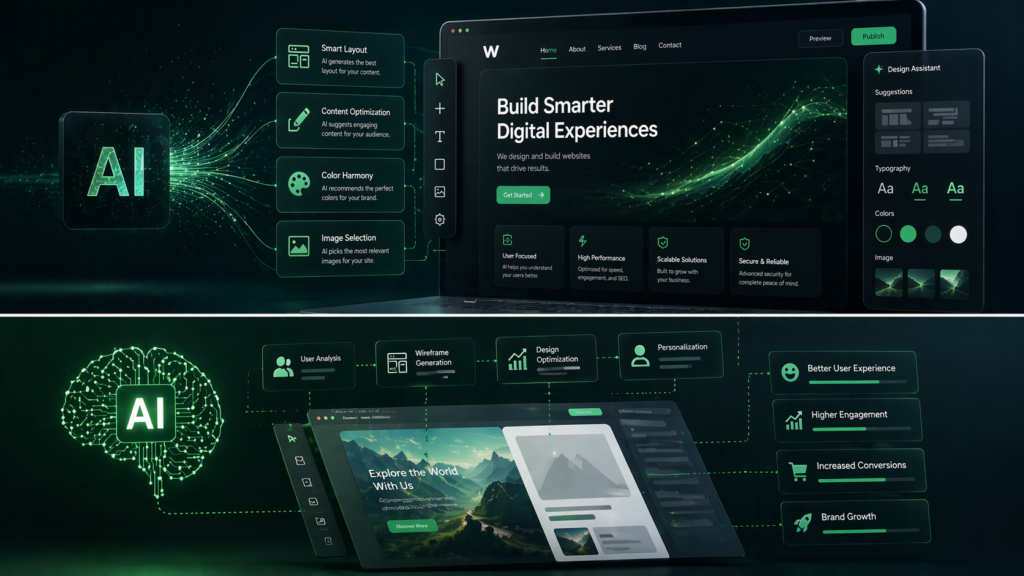
AI tools are increasingly capable of automating various aspects of the design and development workflow. AI-powered design platforms can generate initial website layouts, suggest color palettes, and even create custom graphics based on user input or existing brand guidelines. This significantly speeds up the prototyping phase, allowing designers to focus on more complex creative challenges. On the development side, AI can assist with code generation, bug detection, and even optimize website performance by identifying bottlenecks. This automation not only reduces development time and costs but also minimizes human error, leading to more robust and efficient websites.
3. Enhanced Accessibility
AI is playing a vital role in making websites more accessible to a broader audience. AI-powered tools can automatically analyze website content for accessibility compliance, suggesting improvements for users with visual, auditory, or cognitive impairments. For instance, AI can generate accurate alt-text for images, provide real-time captioning for videos, and even adapt content presentation based on user accessibility settings. This ensures that your website is usable by everyone, expanding your
4. Predictive Analytics
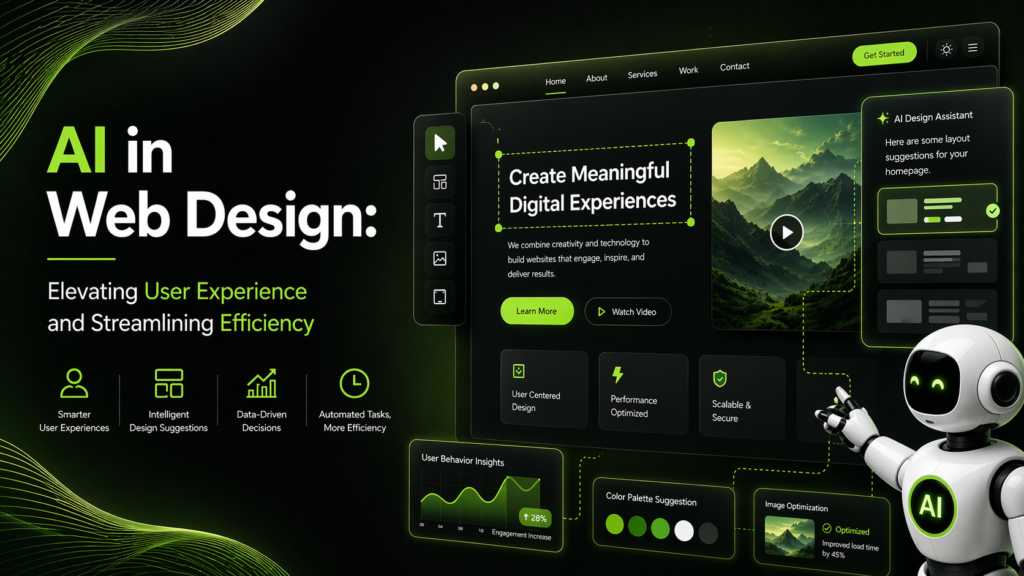
AI excels at processing vast amounts of data to uncover patterns and predict future trends. In web design, this translates to invaluable insights into user behavior. AI can predict which elements of a page are most likely to be clicked, where users might drop off, or what content will resonate most effectively. This predictive power allows designers to make data-driven decisions, optimizing layouts, content placement, and call-to-actions before a site even goes live. By understanding user intent and potential pain points proactively, businesses can continuously refine their web presence for maximum impact.
5. Advanced SEO and Content Optimization
AI is revolutionizing Search Engine Optimization (SEO) by providing sophisticated tools for keyword research, content generation, and performance analysis. AI algorithms can identify emerging trends, analyze competitor strategies, and even assist in writing SEO-friendly content that ranks higher. Beyond keywords, AI can help optimize website structure, internal linking, and technical SEO aspects, ensuring that your site is not only user-friendly but also search engine-friendly. This intelligent approach to SEO can significantly boost organic traffic and online visibility.
Conclusion
AI in web design IS NOT about replacing human creativity, it’s about ENHANCING and AMPLIFYING it. By leveraging AI for personalization, automation, accessibility, predictive insights, and SEO, we create websites that are not only visually compelling but also highly functional and efficient. Our approach focuses on building smarter digital experiences that engage users and deliver measurable results in an ever-evolving landscape.
Are you ready to integrate AI into your next project?